
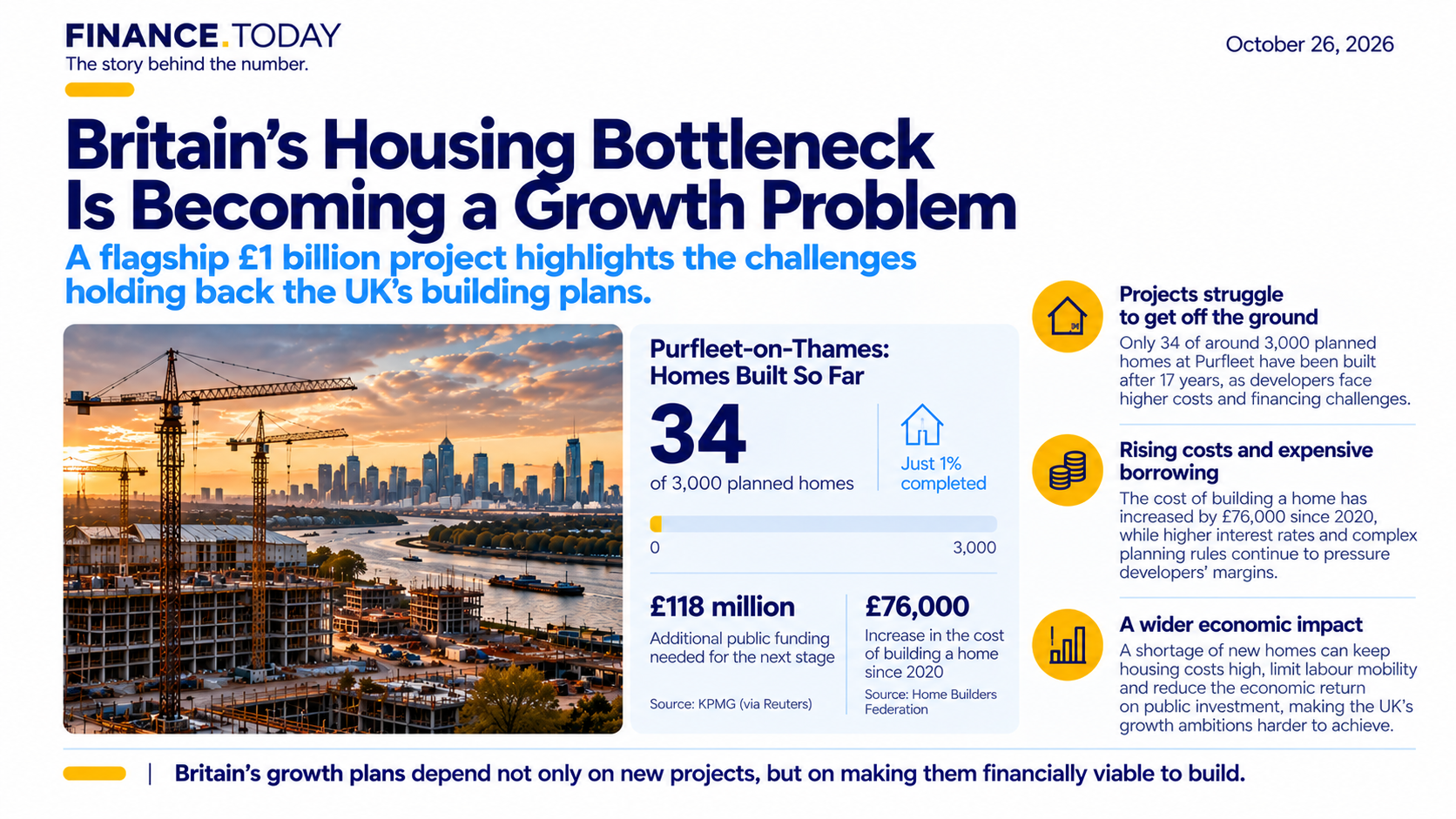

Britain’s £1 billion regeneration plan for Purfleet-on-Thames remains largely stalled 17 years after it was announced. Only 34 of around 3,000 planned homes have been built, as developers struggled to secure financing amid rising construction costs and uncertain returns. The case, reported by Reuters on October 26, illustrates a wider challenge for the UK government as it prepares its budget: ambitious growth plans cannot deliver much if projects fail to reach construction.
The economics are increasingly difficult. Higher building costs, expensive borrowing and complex planning requirements can erode developers’ margins before a project generates revenue. A review by KPMG found that the next stage of the Purfleet project remains financially constrained and would require £118 million in public funding. Across the UK, the Home Builders Federation estimates that the cost of building a home has risen by £76,000 since 2020, while planning approvals remain below the pace needed to meet the government’s housing ambitions.
The consequences extend beyond the property market. A shortage of homes can push up housing costs, restrict workers’ ability to move for jobs and direct capital towards existing property rather than new productive investment. Infrastructure delays also raise costs for businesses and weaken the economic return on public investment. Planning reforms may help, but faster approvals alone will not solve projects that are unaffordable to finance. Britain’s growth challenge is therefore not simply to announce more development, but to make viable projects possible to build.
The Story Behind the Number.
