
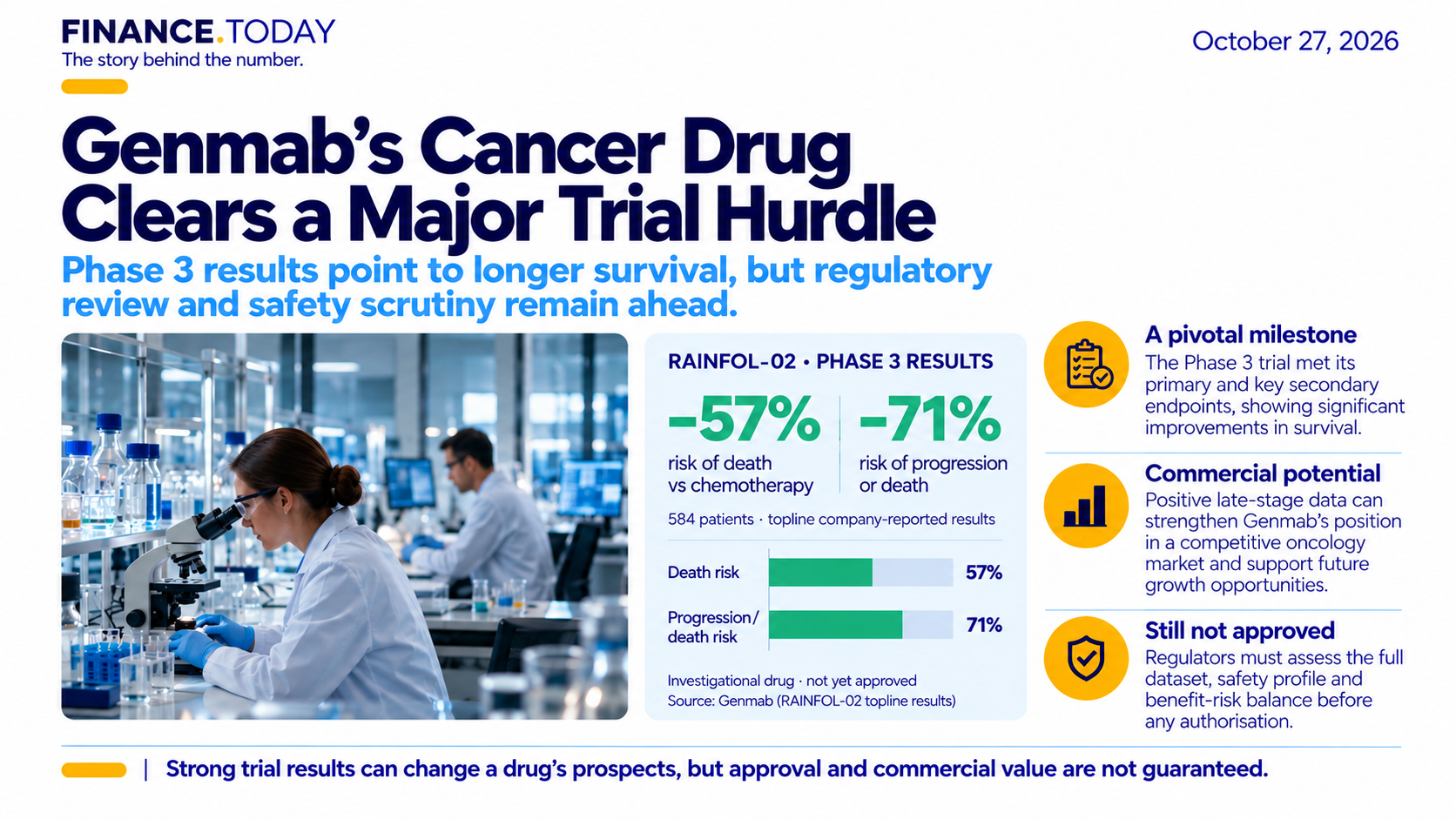

Danish biotechnology company Genmab reported positive results from a Phase 3 trial of its experimental cancer drug rinatabart sesutecan, also known as Rina-S, in patients with platinum-resistant ovarian cancer. The study met its primary endpoint of progression-free survival and its key secondary endpoint of overall survival, comparing the drug with chemotherapy chosen by investigators. In the 584-patient trial, the company reported a 57% reduction in the risk of death and a 71% reduction in the risk of disease progression or death.
The results matter because platinum-resistant ovarian cancer can be difficult to treat, leaving patients with limited effective options. Rina-S is an antibody-drug conjugate designed to deliver a cancer-fighting payload to targeted cells. If further review confirms a favourable benefit-risk profile, the findings could strengthen Genmab’s position in a competitive oncology market and expand the commercial potential of its development pipeline.
But a successful trial is not the same as an approved medicine. The company has said it plans to discuss next steps with regulatory authorities and submit the data for presentation at a future medical meeting. Regulators will need to assess the full results, safety profile and potential benefits before any authorisation. Commercial value will also depend on eventual labelling, market access, competition and the ability to deliver treatment in practice.
For investors, the milestone reduces one important clinical uncertainty but does not remove regulatory or commercial risk. The next test is whether the full dataset supports a clear path from promising trial results to an approved treatment.
The Story Behind the Number.
