
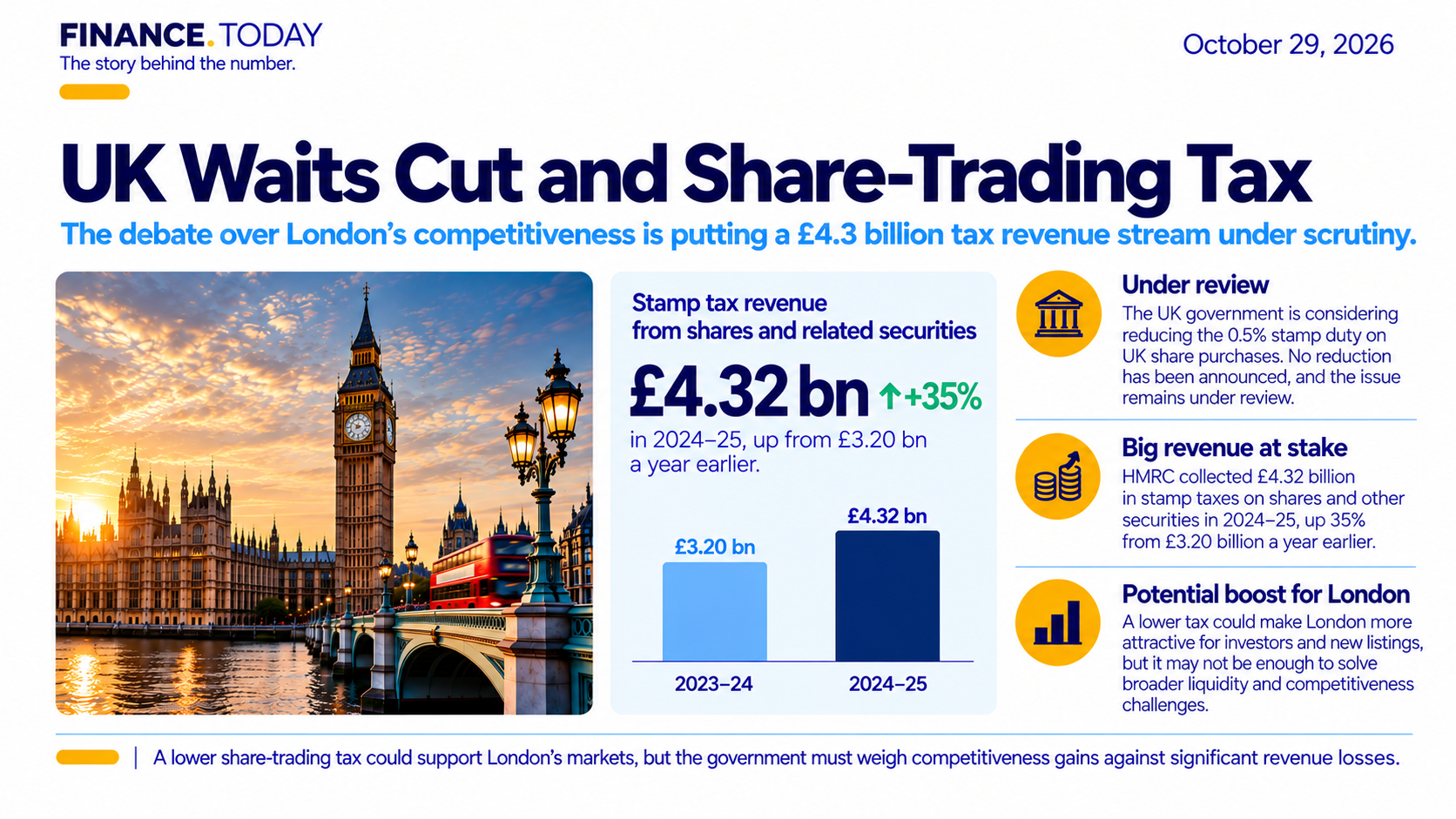

The debate over London’s competitiveness is putting a £4.3 billion tax revenue stream under scrutiny.
The UK government is considering whether to reduce the 0.5% stamp duty charged on purchases of UK shares. In its latest Budget, the Treasury acknowledged calls for reform and said the issue would remain under review. No reduction has been announced. Supporters of a cut argue that transaction taxes make London less attractive to investors and companies considering a stock-market listing, particularly as businesses increasingly look to deeper capital markets overseas.
The fiscal trade-off is substantial. HM Revenue and Customs recorded £4.32 billion in receipts from stamp taxes on shares and other liable securities in the 2024–25 financial year, up 35% from £3.20 billion a year earlier. The government has already introduced a temporary stamp-duty exemption for newly listed companies, which is forecast to cost £255 million in forgone revenue through 2031. That illustrates the tension between encouraging new listings and protecting public finances.
A lower transaction tax could improve the economics of trading UK shares, but it would not, by itself, resolve London’s broader challenges around market liquidity, company valuations and access to growth capital. The effect would depend on whether lower costs meaningfully change investor behaviour and companies’ listing decisions.
The key question is not simply whether the tax is high, but whether reducing it would generate enough additional investment and market activity to justify the revenue lost.
The Story Behind the Number.
