
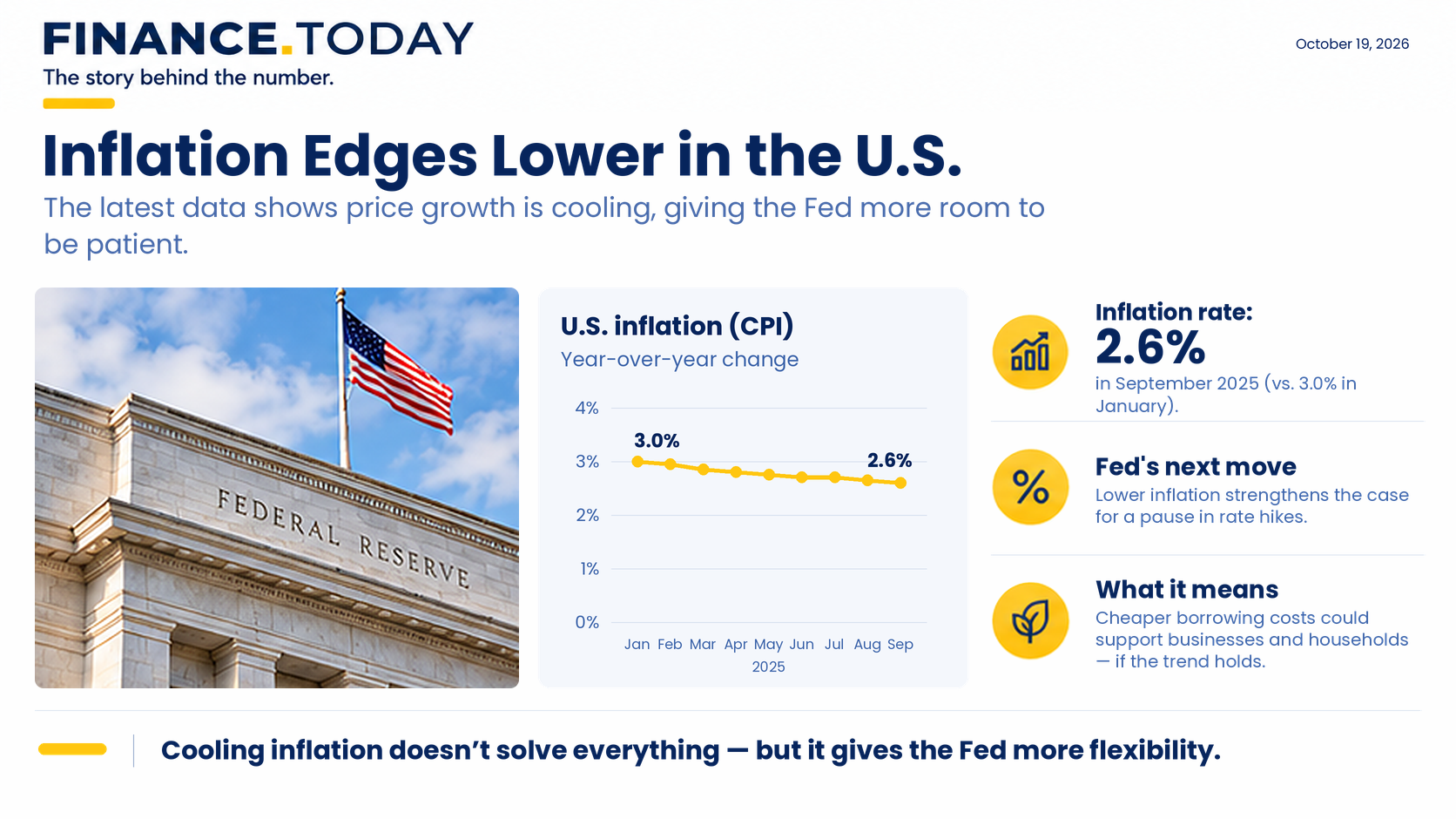

U.S. inflation slowed to 2.6% in September, down from 3.0% in January. A small move on a chart, but a meaningful one for the Fed.
Cooler inflation gives policymakers more room to be patient. Instead of reacting to every price swing, they can wait for more data before deciding on rates.
Why does that matter outside Washington? Borrowing costs. Mortgages, business loans and credit cards all take their cues from interest rates. If the Fed can hold steady, borrowing could get cheaper over time, which would support households and companies, if the trend holds.
But one softer reading doesn’t settle the question. At 2.6%, inflation is still above the Fed’s 2% target.
The number shows the direction. The Fed’s next move shows what it means.
The story behind the number.
