
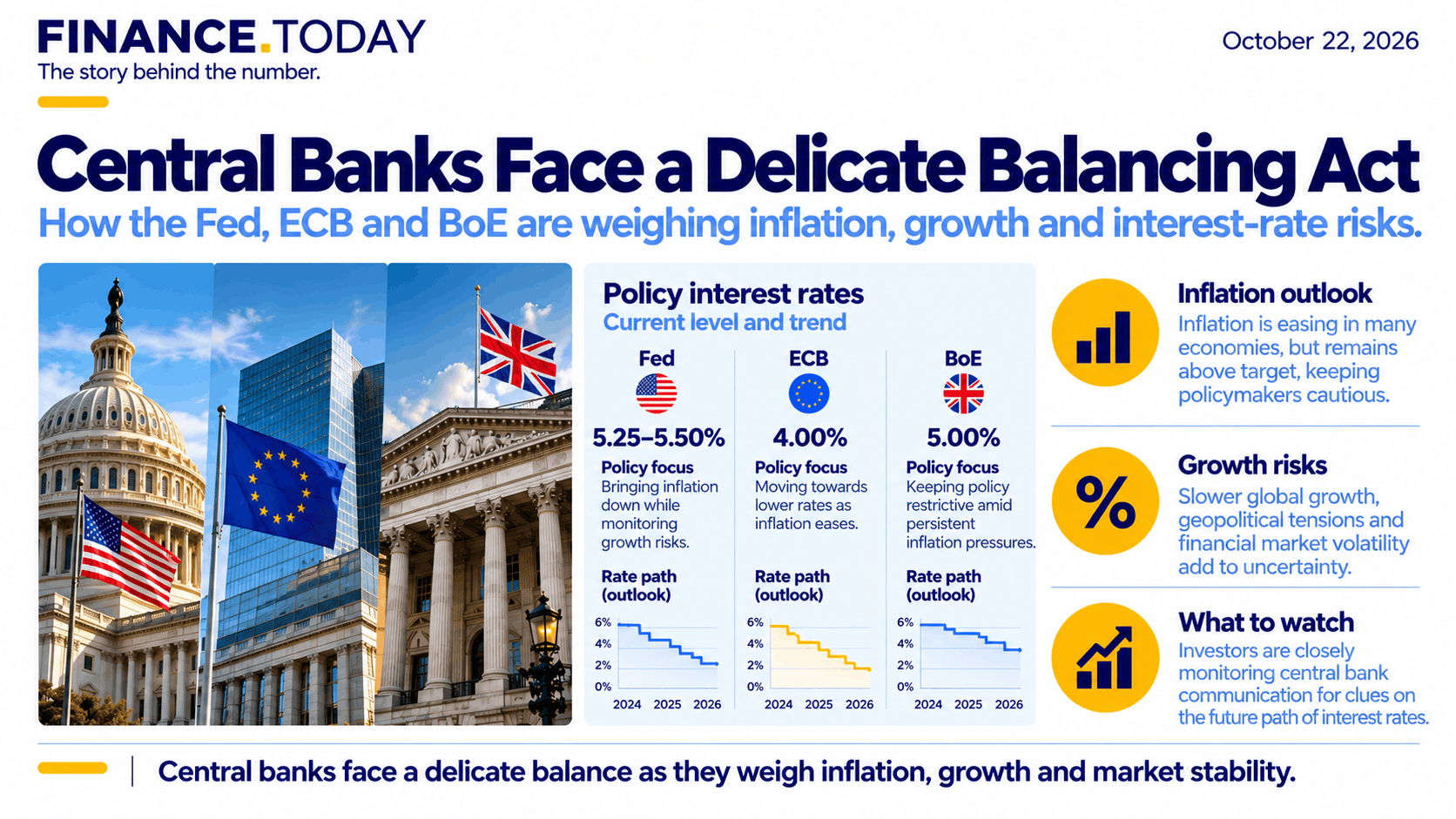

Central banks are once again in the spotlight as policymakers balance persistent inflation risks against signs of slower growth. The Federal Reserve, European Central Bank and Bank of England are all being watched closely—not just for their next decisions, but for what their language reveals about the path ahead.
For markets, the details matter: inflation data, growth indicators and forward guidance can shift expectations for interest rates, bond yields, currencies and equities. A decision to hold rates steady does not necessarily mean policy is on autopilot; the accompanying message can be just as important as the decision itself.
The key question is whether central banks see enough progress on inflation to ease pressure on the economy—or whether they believe rates need to remain restrictive for longer.
The story behind the number.
