
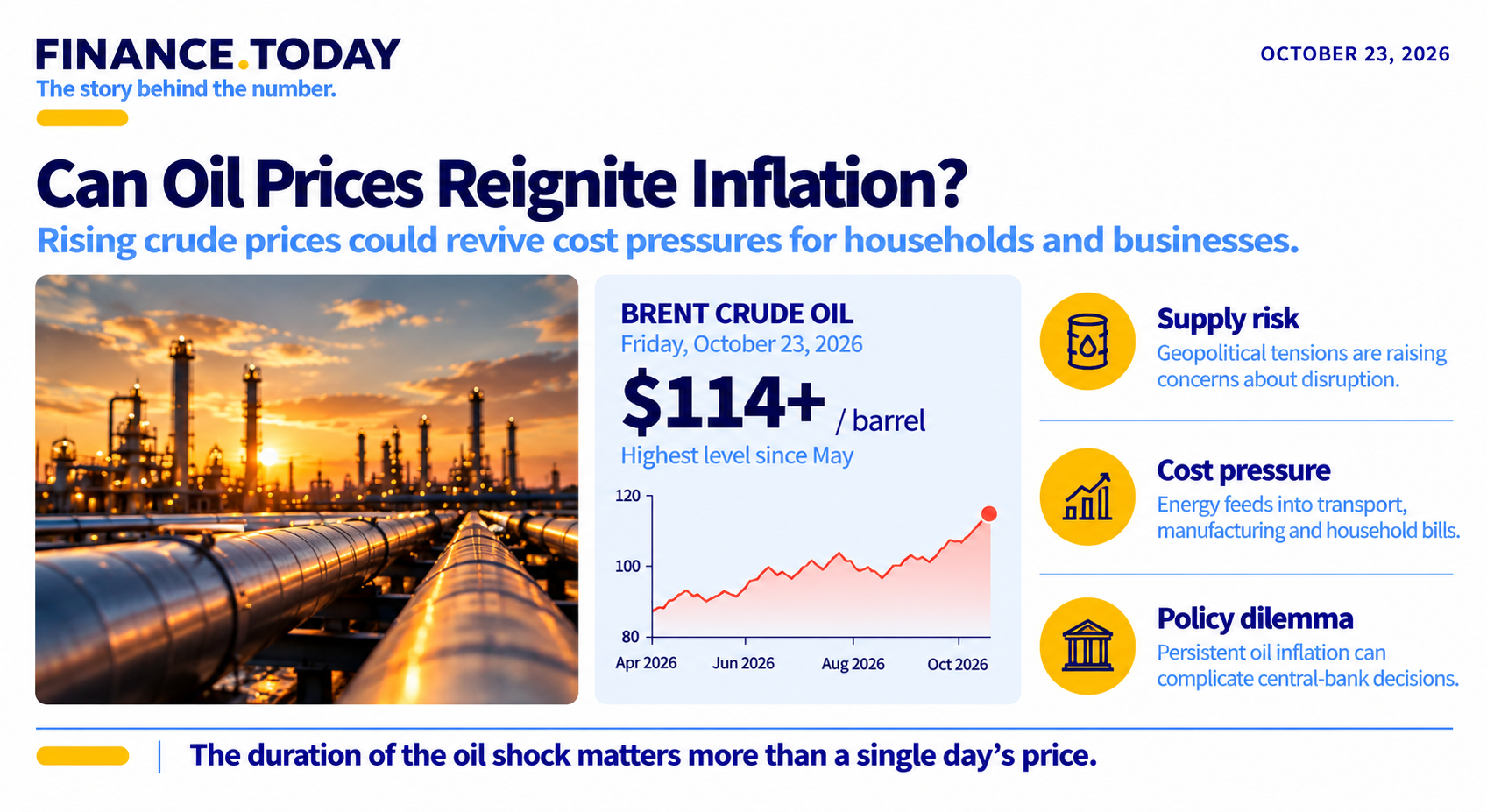

Oil is climbing again as geopolitical tensions threaten energy supplies, creating a fresh challenge for economies already sensitive to borrowing costs and persistent inflation. On Friday, October 23, Brent crude rose above $114 a barrel, reaching its highest level since May, as concerns about further disruption in the Middle East unsettled energy markets.
The increase matters because energy prices feed into transport, manufacturing and household bills. If elevated oil prices persist, businesses may face higher input costs while consumers have less room to spend elsewhere. That combination can complicate the task facing central banks: inflation may remain under pressure even as higher costs weigh on economic activity.
The market response reflects more than the price of crude itself. Investors are also weighing the risk that geopolitical instability could disrupt supply and keep energy markets volatile. A temporary spike would have different consequences from a prolonged period of expensive oil, particularly for energy-importing economies and industries with limited ability to pass costs on to customers.
The key question is whether the latest rise proves short-lived or becomes another sustained cost shock. The longer oil stays elevated, the harder it may be for businesses, households and policymakers to distinguish a temporary disruption from a broader inflation problem.
The Story Behind the Number.
