
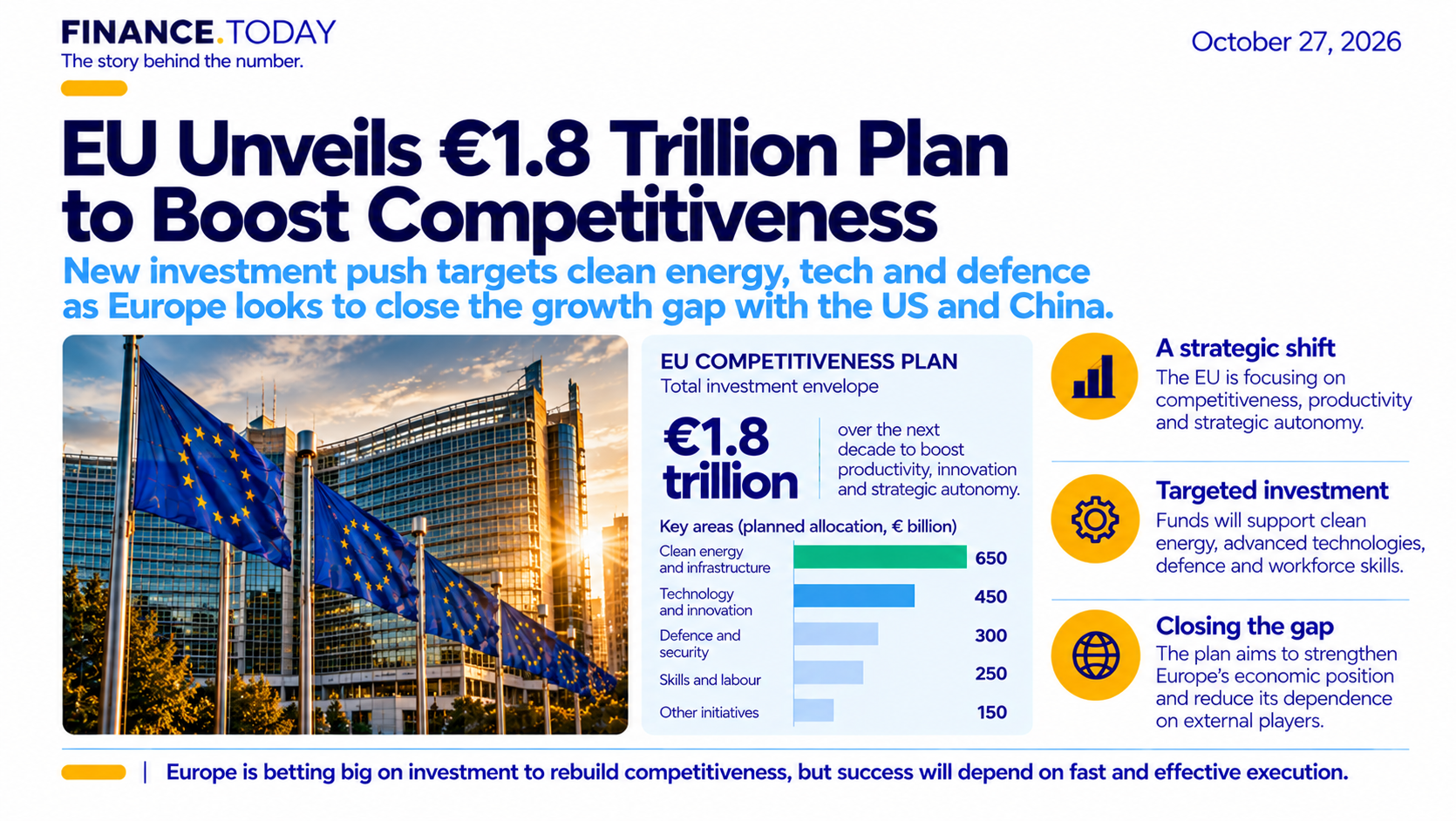

The European Commission has proposed a long-term EU budget worth almost €2 trillion for 2028–2034, placing competitiveness, research, innovation, clean technology and security among Europe’s strategic priorities. The proposal is designed to help the bloc strengthen its economic position as it faces intensifying competition from the United States and China. The final budget, however, remains subject to negotiations between member states and the European Parliament.
The scale of the proposal reflects a central challenge for Europe: turning its industrial base, research capabilities and single market into stronger productivity and sustainable growth. The Commission wants a more streamlined funding structure, with fewer and simpler programmes, while directing investment towards strategic technologies and industries. Clean energy, digital infrastructure, defence and innovation are all part of the wider competitiveness agenda.
But the headline figure does not mean that €1.8 trillion has been approved for a single new investment plan. In October, the Irish presidency of the Council proposed reducing the Commission’s original budget framework by around 8%, illustrating the difficult negotiations over how much Europe should spend and which priorities should receive funding. Governments remain divided over contributions, agricultural support, regional development and the cost of new strategic commitments.
For businesses and investors, the outcome could influence access to research funding, infrastructure investment and support for emerging technologies. Yet the impact will depend on more than the size of the budget. Clear priorities, efficient allocation and timely delivery will determine whether public spending attracts private capital and translates into higher productivity.
Europe is making competitiveness a central budget priority. The real test will be whether its leaders can reach an agreement and turn that ambition into measurable economic results.
The Story Behind the Number.
