
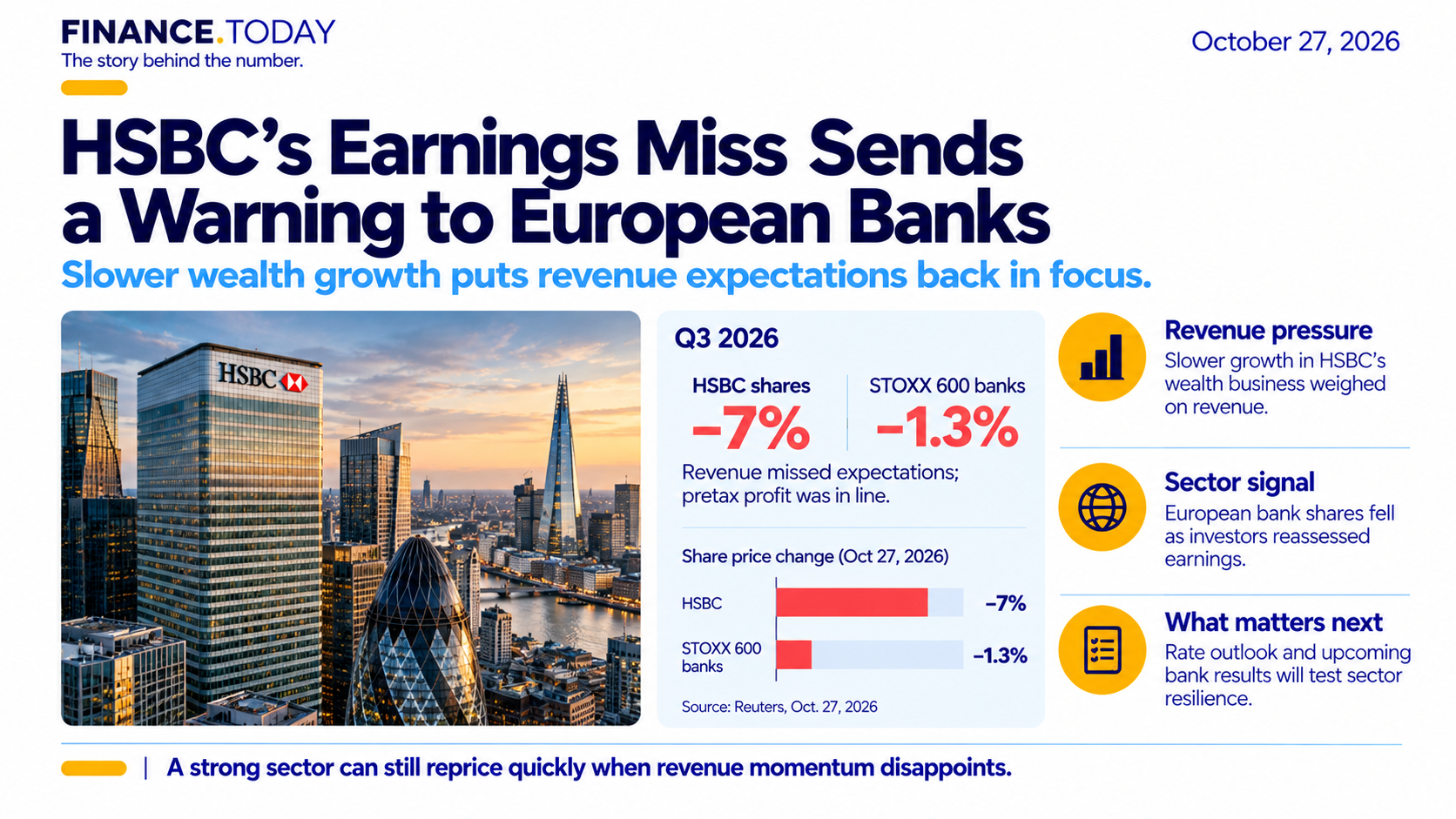

HSBC shares fell sharply on October 27 after the bank reported third-quarter revenue below market expectations. Revenue was weighed down by slower growth in its wealth business, while pretax profit came in broadly in line with estimates. The reaction was swift: HSBC shares dropped around 7%, and the STOXX 600 banking sector declined 1.3%, putting pressure on European markets.
The results highlight a key challenge for lenders. Strong profits do not always guarantee a positive market reaction if investors expect more growth. Wealth management has become an important business for major banks, offering fee income beyond traditional lending. When that growth slows, markets may question whether revenue momentum can keep pace with expectations.
The wider backdrop makes the signal more important. Banks are navigating shifting interest-rate expectations, higher financing costs and uncertainty over the economic outlook. Changes in the relationship between short- and long-term yields can also affect lending margins. At the same time, investors are comparing banks’ performance with opportunities in other sectors and reassessing how durable recent earnings strength may be.
One disappointing quarter does not establish a sector-wide downturn. But it does show how quickly sentiment can change when revenue falls short. Investors will be watching upcoming bank results and central-bank signals for evidence of whether HSBC’s miss was company-specific or part of a broader shift in the earnings outlook.
The Story Behind the Number.
