
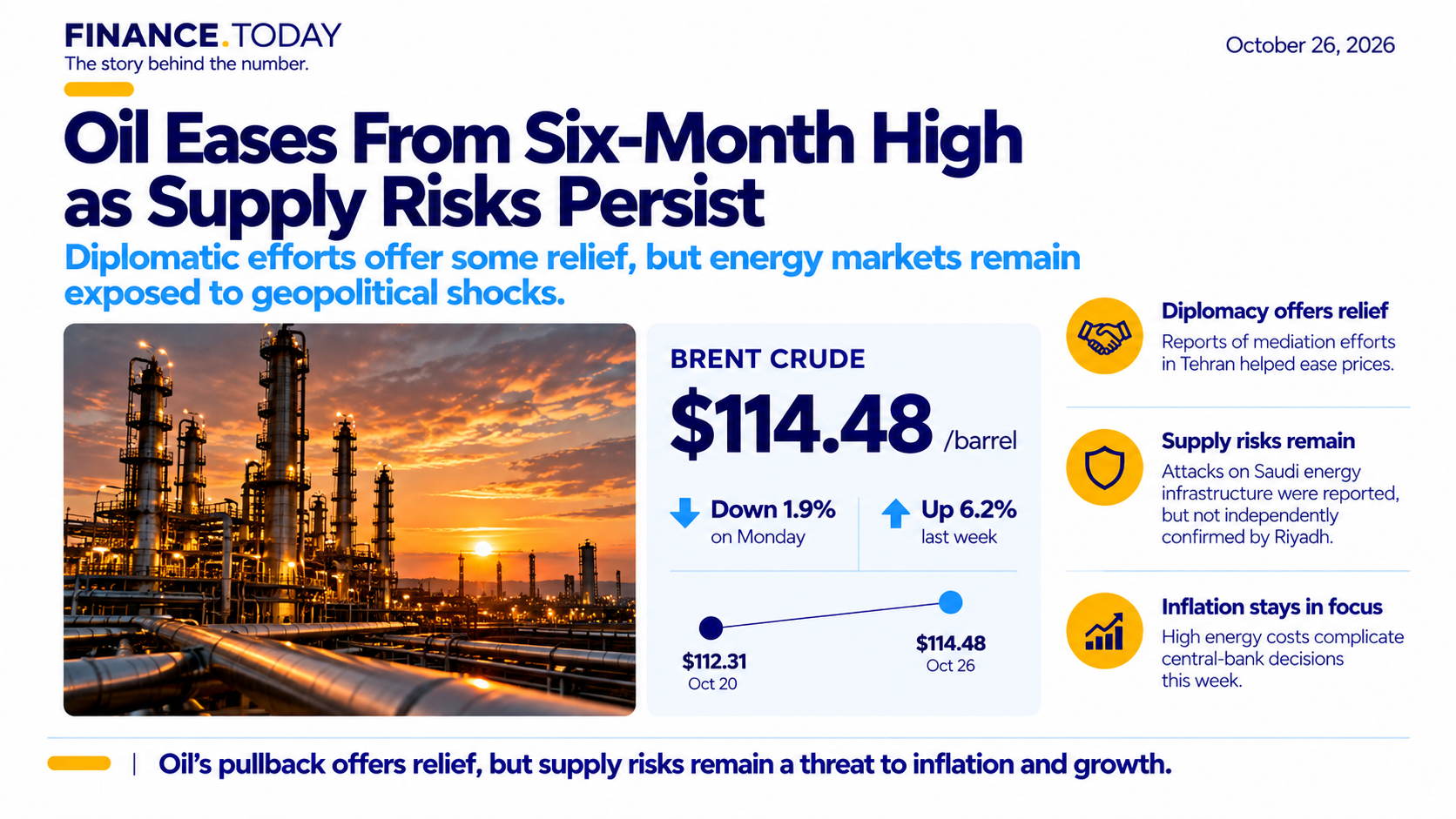

Oil prices retreated on Monday after a sharp rally pushed Brent crude to its highest weekly close since mid-2022. Brent futures fell 1.9% to $114.48 a barrel, offering some relief to markets unsettled by the threat of further disruption to global energy supplies. Reports of diplomatic efforts involving Qatar, Iran and the United States helped temper immediate concerns, but the underlying risks remain unresolved.
The recent surge has been driven partly by security concerns in the Middle East. Houthi attacks on Saudi Arabia last week heightened fears over the country’s energy infrastructure and the reliability of supply routes. On Monday, the group said it had targeted oil-pumping facilities and Riyadh airport, although the reported attacks had not been independently confirmed by Saudi authorities. Even without a sustained physical supply loss, uncertainty can push traders to price in a higher risk premium.
For the global economy, the consequences extend well beyond the oil market. Higher crude prices raise transport and production costs, squeeze household budgets and complicate decisions for central banks already confronting inflation pressures. If energy costs remain elevated, policymakers may have less room to ease monetary policy even as expensive fuel weighs on consumer demand and business confidence.
The latest pullback shows how quickly prices can respond to diplomatic signals. But a temporary decline is not the same as a lasting improvement in supply security. The next direction for oil will depend on whether diplomatic efforts reduce the threat of disruption, or whether renewed tensions push energy prices higher again.
The Story Behind the Number.
