
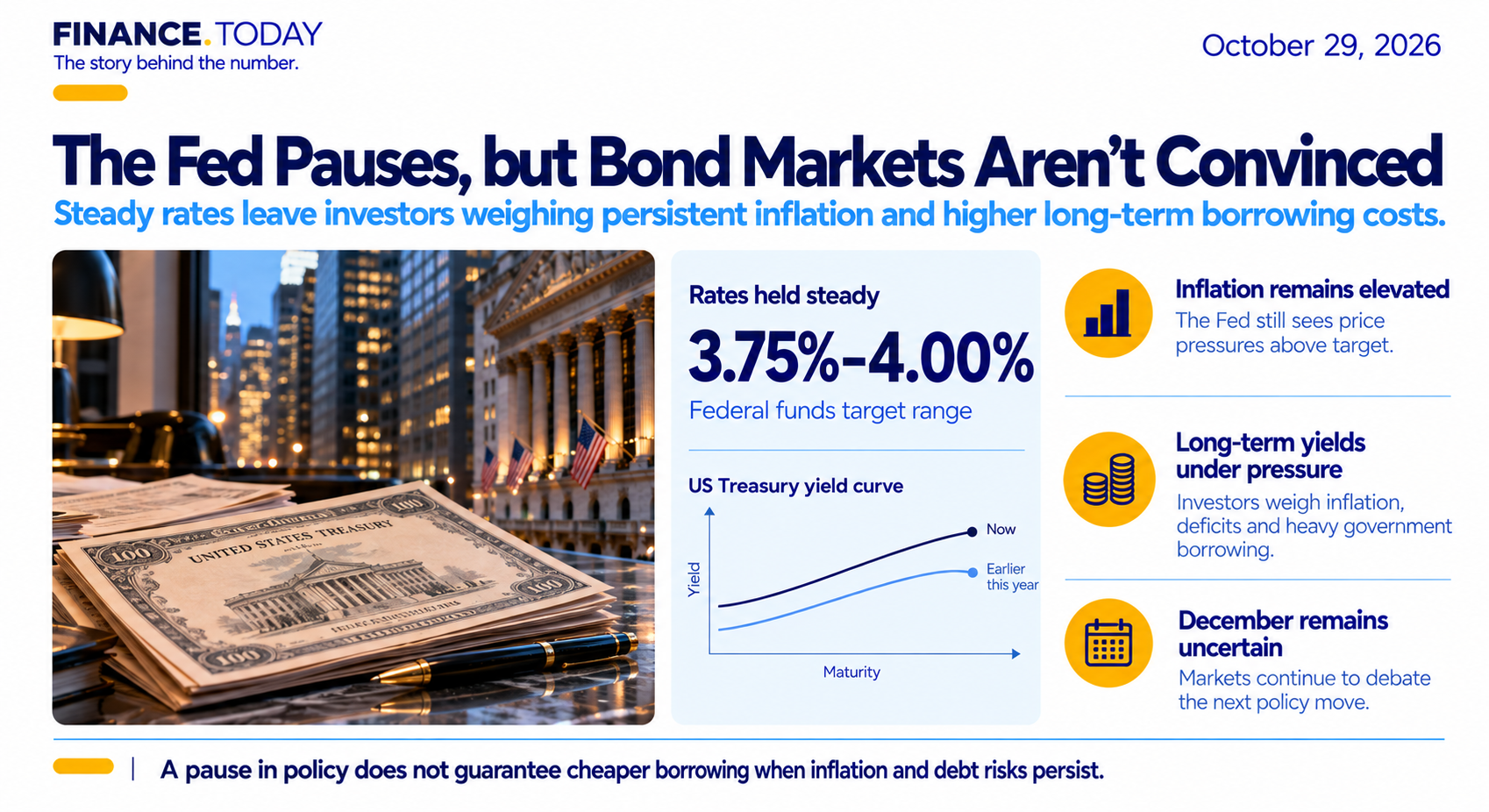

Steady interest rates have done little to settle bond investors, as persistent inflation and government borrowing keep long-term financing costs under pressure.
The US Federal Reserve held its benchmark interest rate at 3.75% to 4.00% on October 28, but its message offered no clear assurance that borrowing costs would fall soon. Policymakers upgraded their assessment of the economy from “solid” to “strong,” while acknowledging that inflation remains elevated, according to Reuters.
Bond markets reacted cautiously. Treasury yields rose across much of the curve, particularly at longer maturities, and the gap between two-year and ten-year yields widened. Investors are weighing the prospect of another rate increase in December against uncertainty over whether inflation will eventually return to the Fed’s 2% target.
The tension extends beyond monetary policy. Persistent price pressures, federal deficits and substantial government borrowing can push long-term yields higher because investors demand additional compensation for holding bonds over many years. That can keep mortgages, corporate loans and other forms of financing expensive even when the central bank leaves rates unchanged.
For investors, the distinction is crucial: a pause in rate decisions is not the same as an easing of financial conditions. The next signals will come from inflation data, economic growth and the Fed’s assessment of whether price pressures are truly receding.
The Story Behind the Number.
