
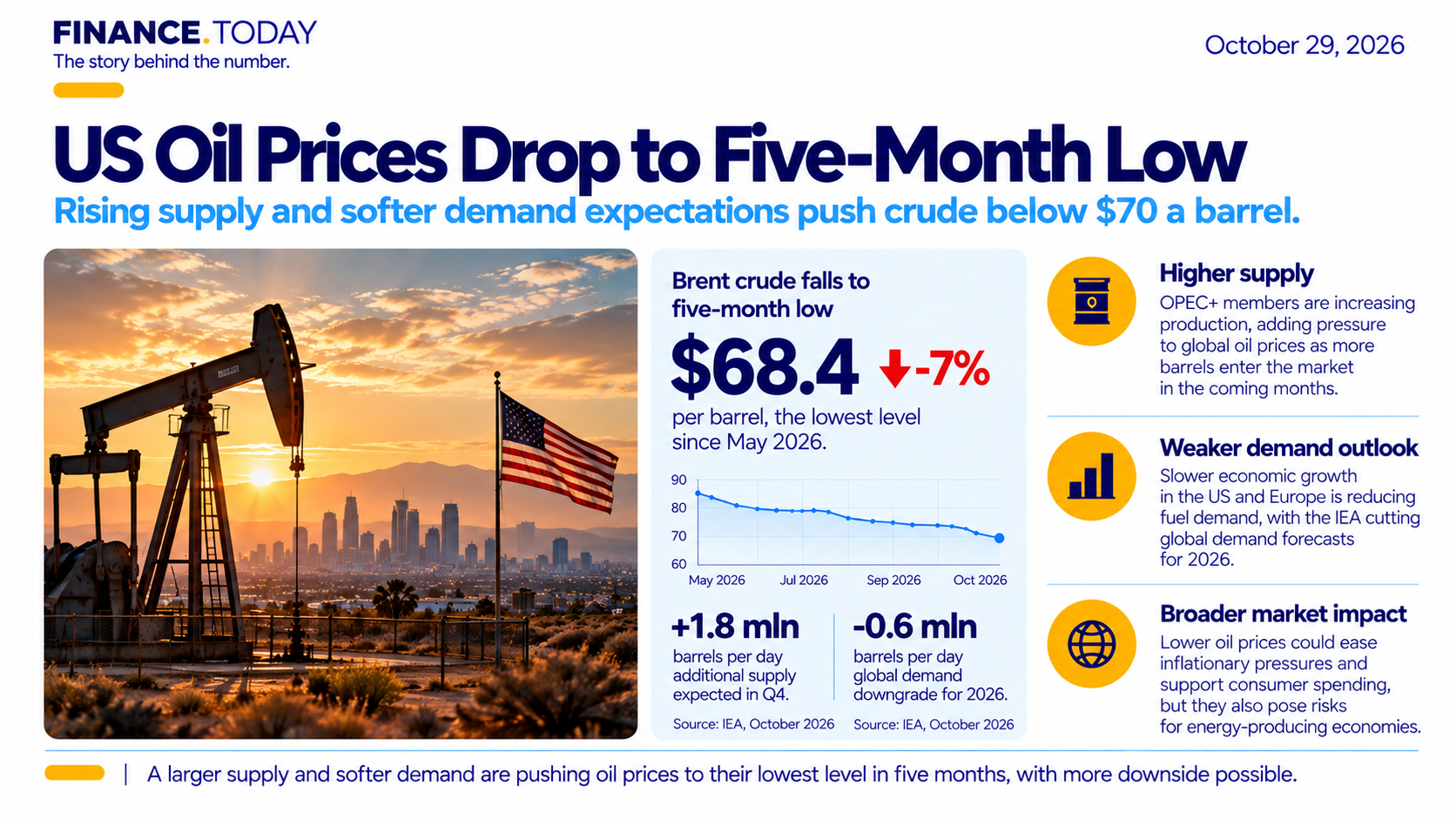

Renewed diplomatic efforts are easing some of the pressure on oil markets, but persistent geopolitical risks continue to keep crude prices elevated.
Oil prices fell on Thursday, October 29, as traders weighed the possibility of renewed negotiations between the United States and Iran against ongoing risks to Middle Eastern energy supplies. Brent crude futures declined 0.7% to $114.47 a barrel, while US West Texas Intermediate fell 1.1% to $101.65, according to Reuters.
The shift in sentiment followed reports that US Vice President JD Vance had sent a letter seeking to revive negotiations with Iranian officials. Qatar has also presented Iran with a draft proposal aimed at ending the conflict involving the United States and Israel. Although the diplomatic signals offered some relief to markets, the path to an agreement remains uncertain.
Supply concerns have not disappeared. Attacks affecting regional infrastructure and shipping routes continue to threaten the movement of crude, while elevated transportation and insurance costs add pressure across energy supply chains. US crude inventories also fell by 1.9 million barrels in the week ending October 23, highlighting the importance of closely monitoring physical supply.
For investors, the market’s next move will depend on whether diplomatic progress translates into more reliable energy flows. A credible de-escalation could reduce the geopolitical premium embedded in prices, but renewed conflict could quickly reverse the decline.
The Story Behind the Number.
