
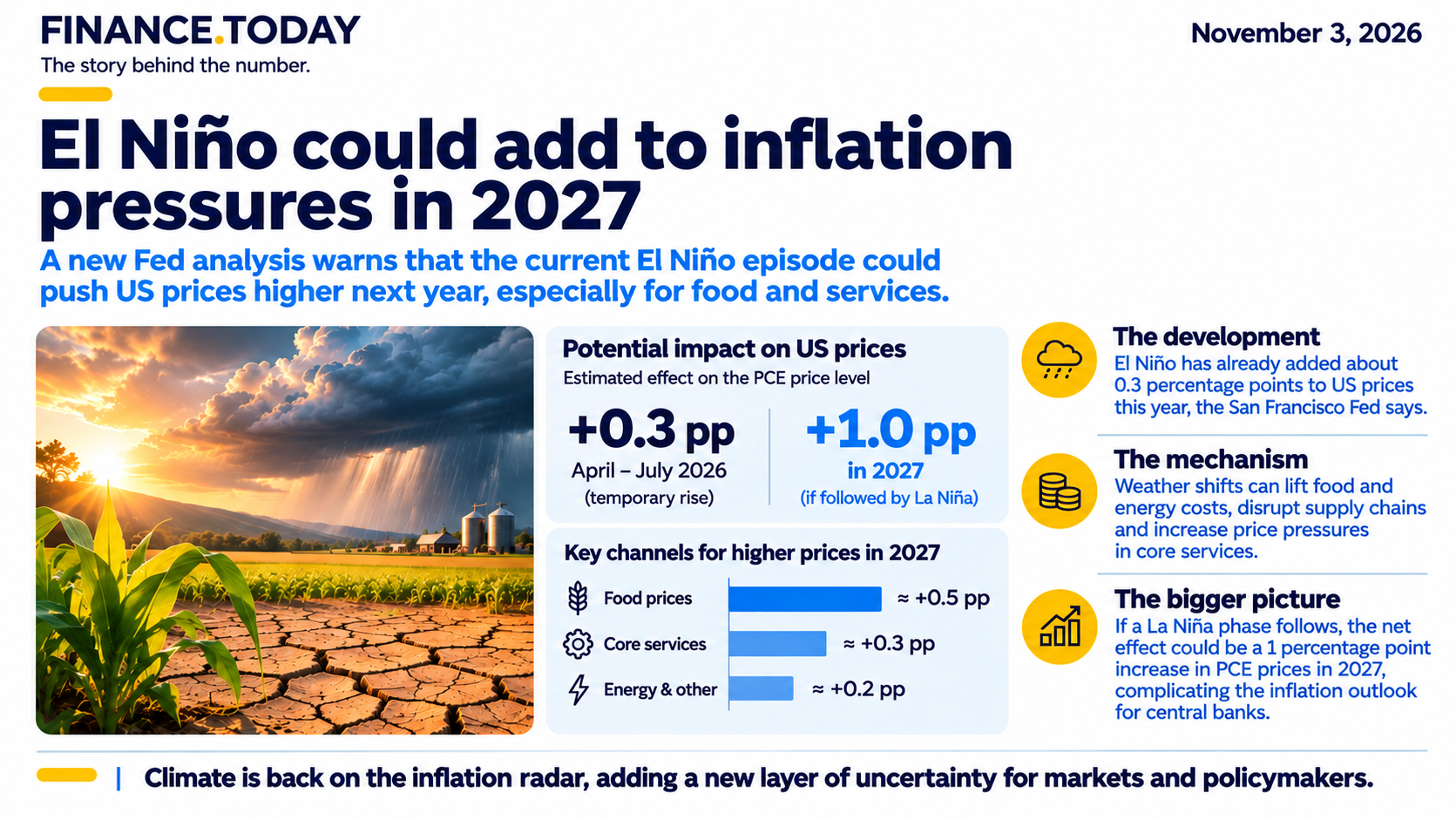

A new analysis from the Federal Reserve Bank of San Francisco identifies the current El Niño episode as a potential source of renewed US inflation in 2027. Researchers estimate that the weather pattern already added approximately 0.3 percentage points to the US personal consumption expenditures (PCE) price level between April and July 2026. This temporary effect is expected to fade by the end of the year.
The longer-term risk is more significant. Historical analysis suggests that the current episode could contribute to a net 1 percentage point increase in PCE prices over 2027 if it is followed by La Niña. The researchers identify food prices and core services as the main channels through which these pressures could emerge.
The mechanism extends beyond agriculture. Changes in rainfall and temperature can affect food production, energy demand, construction and supply chains. Because these effects cross national borders, weather-related disruptions in other regions may also feed into US prices. For central banks already dealing with elevated inflation and energy costs, another supply-side shock could make the path towards price stability more difficult.
However, the estimate is a risk scenario, not a forecast. The analysis draws on only 22 historical El Niño episodes, including four classified as very strong. If La Niña does not follow, the model finds no additional net price effect in 2027. The key question is how much climate-related uncertainty should now feature in economic and inflation assessments.
The Story Behind the Number.
